

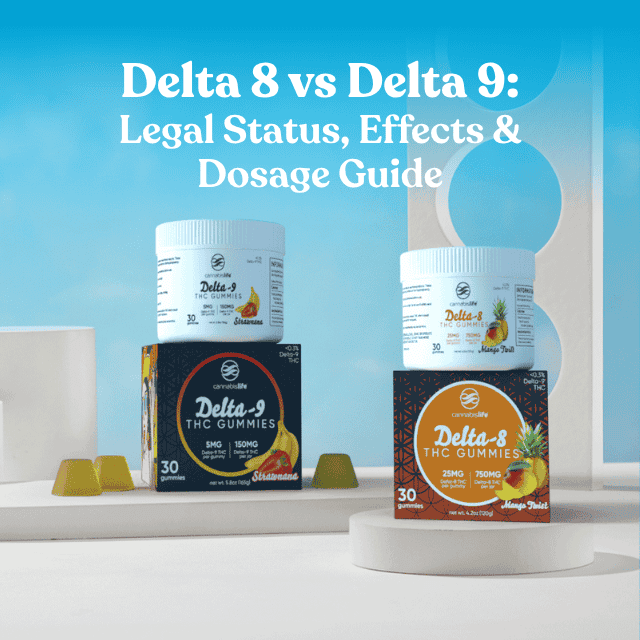
Legal Status, Effects & Dosage Guide
The differences between Delta 8 vs Delta 9 are determined by a single molecular shift that changes how each cannabinoid feels, how potent it is, and how regulators treat it. They are compounds with the same chemical formula, but the double bond sits on carbon eight in Delta 8 and on carbon nine in Delta 9.
This small structural difference completely alters the molecule’s shape and its fit at CB1 receptors. This explains the many consistent differences people report and why hemp-derived products can vary in their effects.
Many users describe Delta 9 as more intoxicating and Delta 8 as milder and clearer, often with less anxiety. A useful rule of thumb is that Delta 8 feels roughly half to two thirds as strong per milligram as Delta 9, which makes Delta 8 products popular with beginners and daytime microdosers, while experienced users often lean towards Delta 9-infused options.
What you Need to Know
Below are some practical points to keep in mind when deciding whether Delta 8 vs Delta 9 is right for you:
- Strength & Effects: Delta 9 usually produces stronger psychoactive effects, while Delta 8 tends to feel gentler and clearer. The distinction between the two makes Delta 8 a common choice for anxiety-sensitive users or people who want daytime microdoses.
- Onset & Duration: Inhalation products like disposable vapes work within minutes and commonly taper off in one to three hours, making vapes useful for short and controllable sessions. Edibles and many tinctures take 60 to 90 minutes to take effect and can last four to six hours or more depending on dose and metabolism.
- Dosing Guidance: Start low and go slow. For edibles, consider 2.5 to 5 mg to begin. For vapes, take one to two puffs and wait for the full onset window to pass before increasing your dose.
- Legal Reality: Federal hemp rules set a regulatory baseline by allowing hemp derivatives when Delta 9 is 0.3% t or less by dry weight, however, states vary in how they regulate Delta 8 and other hemp-derived cannabinoids. Check local laws before buying or traveling with THC products.
- Testing & Safety: Most Delta 8 products on the market are derived from CBD via isomerization, so prioritize third-party lab tested items, such as those at Cannabis Life, that include batch numbers and thorough contaminant panels. Avoid products without clear certificates of analysis (COAs).
Delta 8 vs Delta 9 at a Glance
Chemistry explains most of the differences between Delta 8 vs Delta 9. The position of a single double bond changes the molecule’s shape and its interaction with the body’s cannabinoid receptors, which in turn affects potency and overall potential effects.
How Small Chemical Changes Can Shape the “High”
A small shift in molecular structure affects how tightly a cannabinoid binds to CB1 receptors. Moving a single double bond by one carbon changes both the angle and contact points the molecule makes inside the receptor pocket. That stronger binding aligns with the greater feelings of euphoria and potency that many users report for Delta 9 consumption.
Effects, Onset and Duration: Edibles vs. Vapes
Consumption method strongly shapes how fast you feel effects of Delta 8 or Delta 9-infused gummies and vapes and how long they last. Inhalation products generally take effect within minutes, peak quickly, and taper off over about one to three hours. This makes vapes useful for short sessions. Edibles and take longer to onset, usually 60 to 90 minutes, and can produce effects that last four to six hours or more depending on dose and individual metabolism.
Impairment is the primary functional risk, so do not drive or operate heavy machinery while under the effects of hemp-derived THC. Both cannabinoids can produce a positive drug test, and interactions with prescription medications, particularly sedatives, are possible.
Consult a clinician if you take medications or have health concerns before trying THC gummies, and with vapes take it slow between hits so you can judge peak effects.
Legal Status and the State-by-State Reality
The current legal hemp standing comes from the 2018 Farm Bill, which classifies hemp and its derivatives as federally legal when Delta 9 THC does not exceed 0.3 percent by dry weight. This threshold creates a starting point, but federal agencies, courts, and lawmakers are still defining how these naturally derived cannabinoids fit those rules. Ongoing proposals and legal challenges mean that federal interpretation can change over time.
Different states take different approaches. Many follow the Farm Bill threshold and allow compliant hemp-derived products, while others limit potency, restrict edible or vape formats, or explicitly ban certain isomerized cannabinoids altogether. These of rules affect consumers and retailers and complicates shipping across state lines.
A product labeled "hemp-derived" can still be illegal where you live, so be sure to check local rules before you buy or travel with products. Always confirm the certificate of analysis for a batch-matching report that shows Delta 9 is at or below 0.3 percent by dry weight and that contaminant panels are clean.
Manufacturing, Testing and Safety Red Flags
Delta 8 occurs naturally, and only in trace amounts, so most commercial products are made by converting CBD into Delta 8 through a process called chemical isomerization. The conversion requires controlled chemistry, and sloppy processes can leave residual solvents, acids, or other contaminants.
When comparing Delta 8 vs Delta 9, hemp source and manufacturing route matter as much as measured potency because contaminants can change the risk profile.
Watch for these common red flags on third-party testing reports:
- Residual solvents from the conversion process. Check the COA and avoid products with unexplained solvent residues. Properly purified Delta 8 should show minimal to no residual solvents.
- Heavy metals and pesticide residues. These contaminants can come from the plant or processing equipment, so look for complete heavy metal and pesticide panels on lab reports and choose products with non-detect results. Reliable brands, such as Cannabis Life, publish those results at the batch level.
- Excess Delta 9 above legal thresholds. A product that exceeds 0.3 percent Delta 9 by dry weight may be illegal in many jurisdictions and will likely cause a positive drug test. Match the COA batch number to the package to confirm legal compliance.
Dosing Guide and Choosing the Right Product for You
Start low and go slow, then asses and increase your intake based on how you feel. For inhalation, give yourself 10 to 20 minutes to assess effects; for edibles wait 60 to 90 minutes before increasing dose. A sensible starting approach is one to two puffs for vapes or 2.5 to 5 mg for an edible. Only raise your dose in small increments on different days while logging what you feel.
Match dose to your desired experience rather than habit. Typical targets are:
- Daytime microdoses: 2.5 to 5 mg. Light and functional effects for many users and useful for focus or mild stress relief during the day.
- Relaxed evening: 10 to 15 mg. Noticeable relaxation and calming effects for unwinding, with some reduction in fine motor skills.
- Sleep or strong therapeutic effect: 20 to 25 mg. Stronger relaxation and prolonged effects; plan several hours without driving or demanding tasks.
Keep in mind that Delta 8 often requires a higher milligram amount to reach the same perceived effect as Delta 9, so use milligrams as a guide and adjust based on your response. Choose products with clear, consistent dosing and batch-tested gummies or tinctures for predictable results.
Delta 8 vs Delta 9: Pick the Right Experience for You
The shifted double bond explains most practical differences in effect: a small chemical change alters receptor binding availability, which changes intensity and side-effect risk. Delta 8 is generally milder, while Delta 9 delivers stronger, fuller intoxication for many users. Format matters because edibles and vapes produce different onset and duration, and verified lab testing is essential for safety and consistency.
Choose format and dose based on your goals, tolerance, and testing needs. If you are new or anxiety-sensitive, start with a low-dose Delta 8 edible or a microdosed Delta 9 option and track your response over several trials. For a gummy, begin with 5 to 10 mg, confirm the COA when your product arrives, and wait 60 to 90 minutes before changing your dose to gather clear feedback.
Check local laws, read the COA for batch-level results, and start with low doses until you know how a product affects you. Keep a dosing log to refine what works best for relaxation, sleep, or recreational use, and consult a clinician if you have health concerns or take prescription medications.